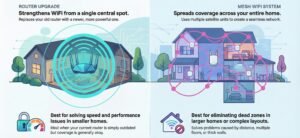
As an Amazon Associate, we may earn a commission if you make a purchase — at no extra cost to you.
Mesh WiFi Not Connecting? Fix Nodes Fast + Stop Dropouts (2025)
Mesh WiFi not connecting? Fix node pairing, dropouts, firmware, and placement in minutes. Plus privacy steps. See quick fixes and recommended systems today. If you’re stuck with mesh WiFi not connecting, the fixes below usually work in under 10 minutes.
Keyword included: mesh WiFi not connecting
When mesh WiFi not connecting, it’s rarely “dead hardware” — it’s usually placement, firmware, or a quick router setting. Most of the time, it’s a fixable combo of node placement, a missed firmware update, or a small router setting (like DHCP or band steering) that blocks pairing. The bad news: your smart home gets hit first—cameras go offline, voice assistants stop responding, and routines fail at the worst time. The good news: you can usually restore a stable mesh in 10 minutes if you troubleshoot in the right order.
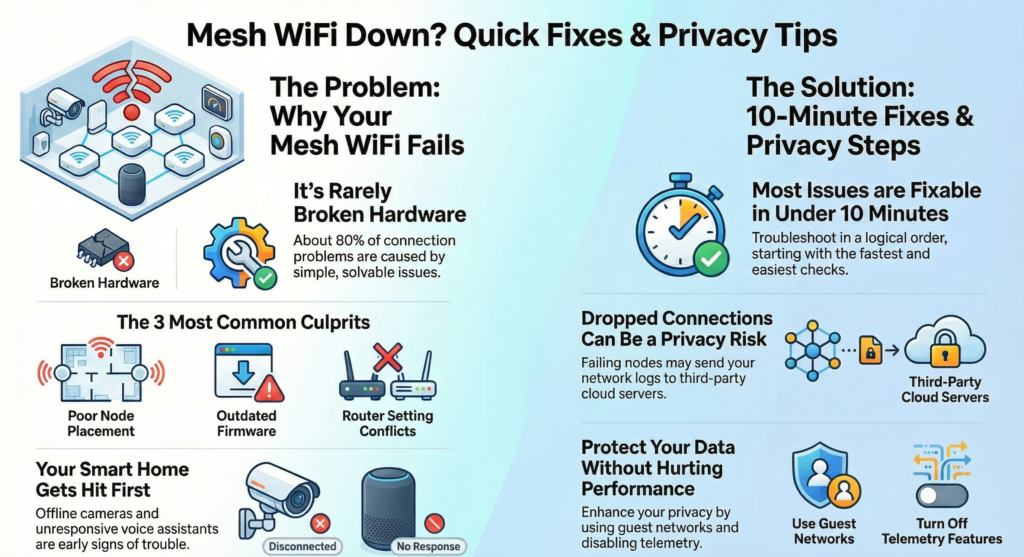
This mesh WiFi not connecting guide starts with the fastest checks, then moves to deeper fixes if your nodes still won’t pair.
Before you replace anything, jump to the recommended section on choosing a secure mesh WiFi system and the best mesh WiFi for smart home setups that handle lots of devices without constant dropouts.
A lot of NestOnyx readers assume their mesh is broken when mesh wifi not connecting during setup, but it’s usually a simple setup problem or hidden router setting. Mesh networks need a few things to be “just so” before they’ll pair, and manufacturers rarely spell it out in plain English. Based on what I’ve seen—and what people share online—the same handful of fixes solve about 80% of these problems.
It’s also worth knowing why mesh nodes drop off, because it can be a privacy thing. If a node keeps losing its connection, it might keep trying to sync with the cloud, and that could send your network logs to third-party servers without you realizing. So, we’ll cover both the fixes and the privacy steps that keep your mesh WiFi running smoothly and your data where you want it.
Key Takeaways
- Most mesh WiFi issues come from node placement, firmware mismatches, or DHCP conflicts—usually fixable in under 10 minutes
- Good node placement and picking the right Wi-Fi channels help prevent dropouts and interference with your smart home gadgets
- Mesh systems often send data to the cloud; using guest networks and turning off telemetry features can help protect your privacy without hurting performance
Mesh Wifi Not Connecting What This Guide Fixes In Minutes
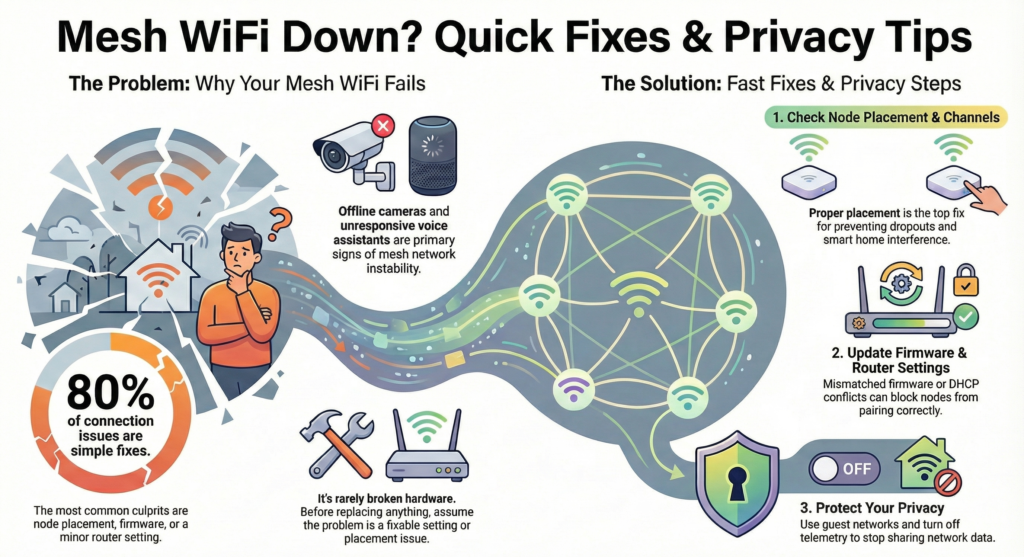
When mesh WiFi won’t connect, it messes up daily internet use and breaks all those smart home routines you set up. If you’re new to this, it’s easy to get lost—was it the router’s spot, a firmware bug, or just too many devices?
Mesh Wifi Keeps Disconnecting Signs And Why It Happens
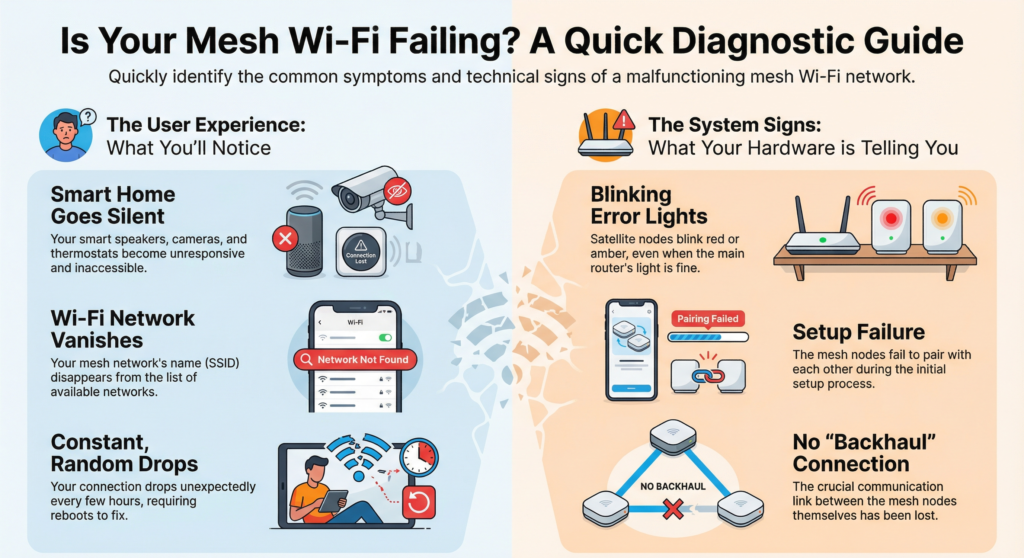
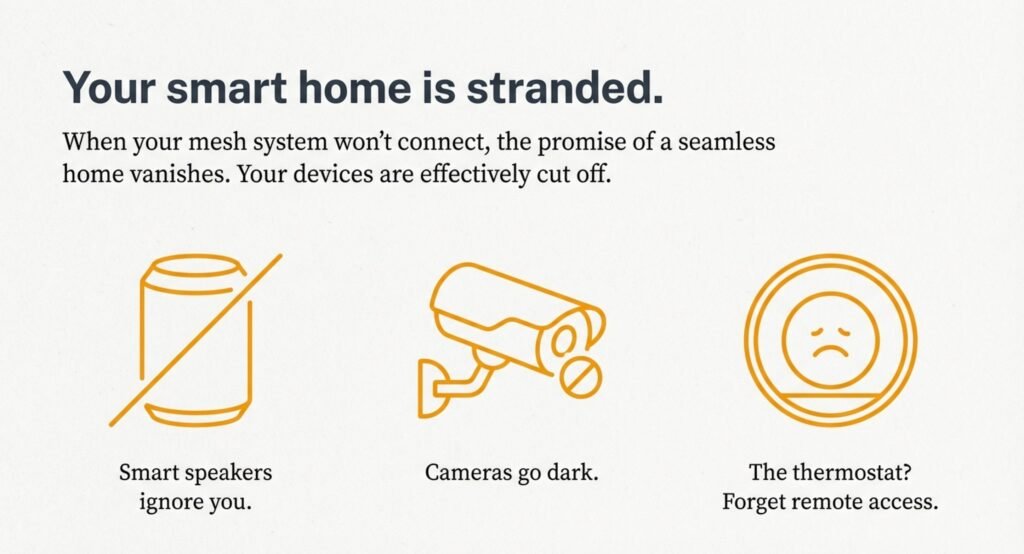
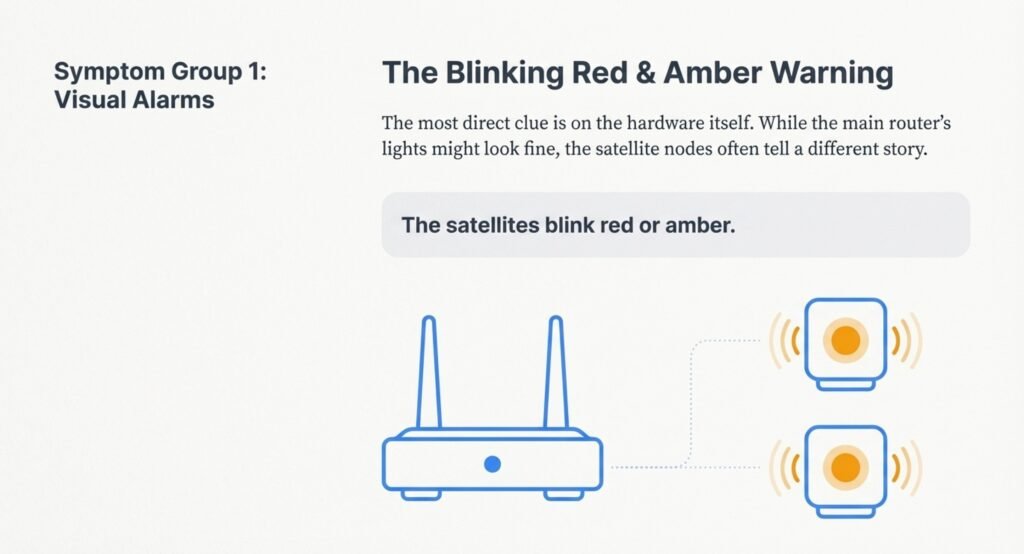
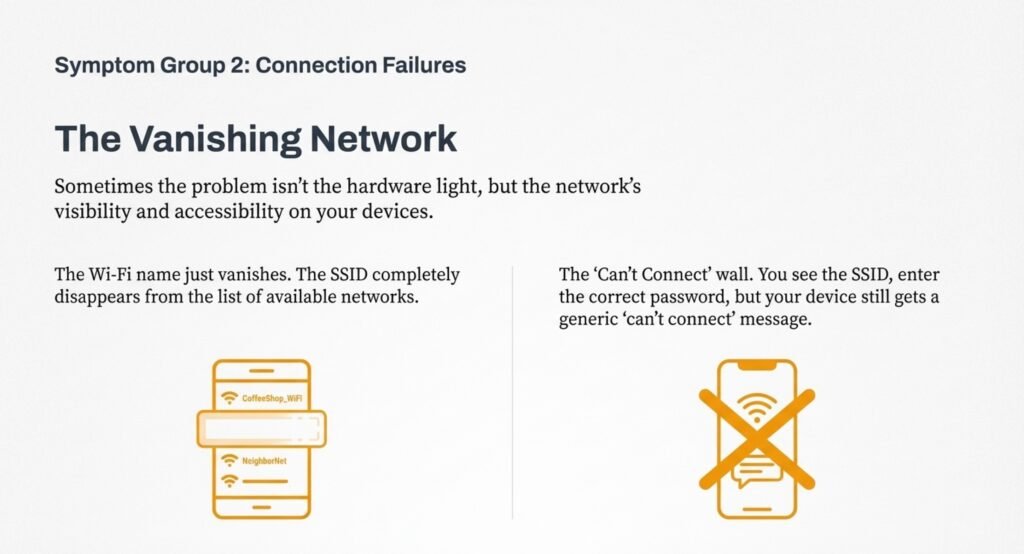
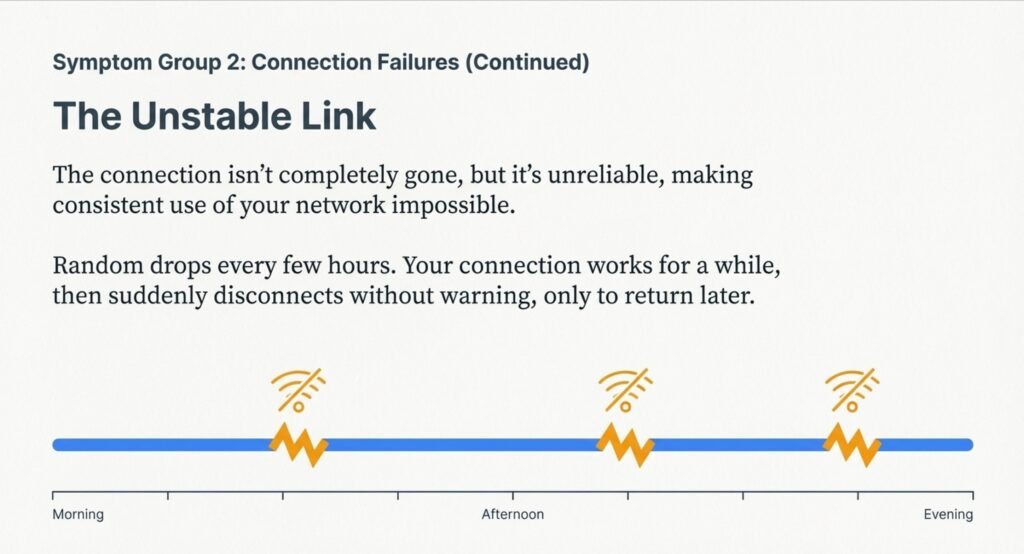
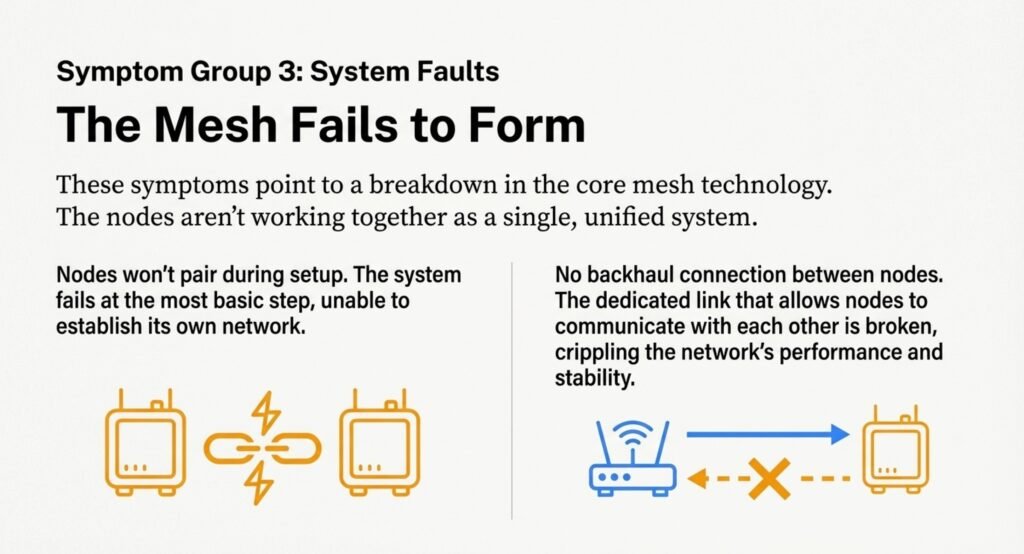
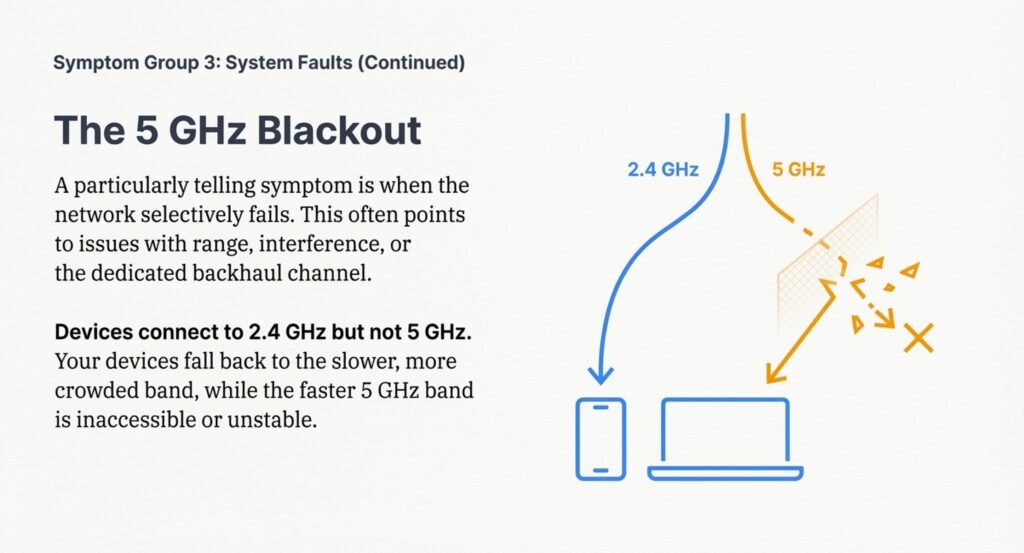
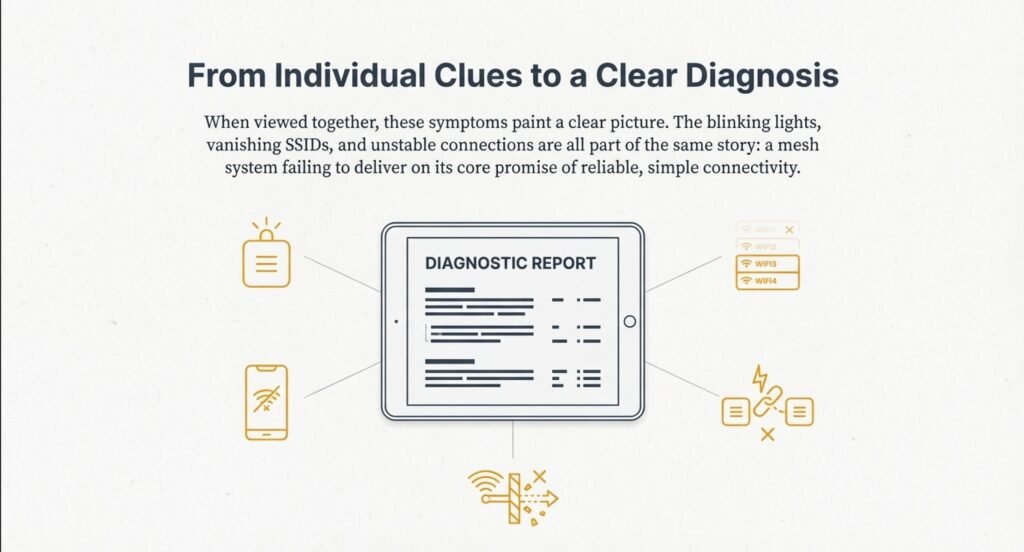
When your mesh system won’t connect, your devices are basically stranded. Smart speakers ignore you. Cameras go dark. The thermostat? Forget remote access.
Sometimes the main router’s lights look fine, but the satellites blink red or amber. Or the Wi-Fi name just vanishes from the list. Even if you see the SSID and type the password, you might get a “can’t connect” message.
Common symptoms:
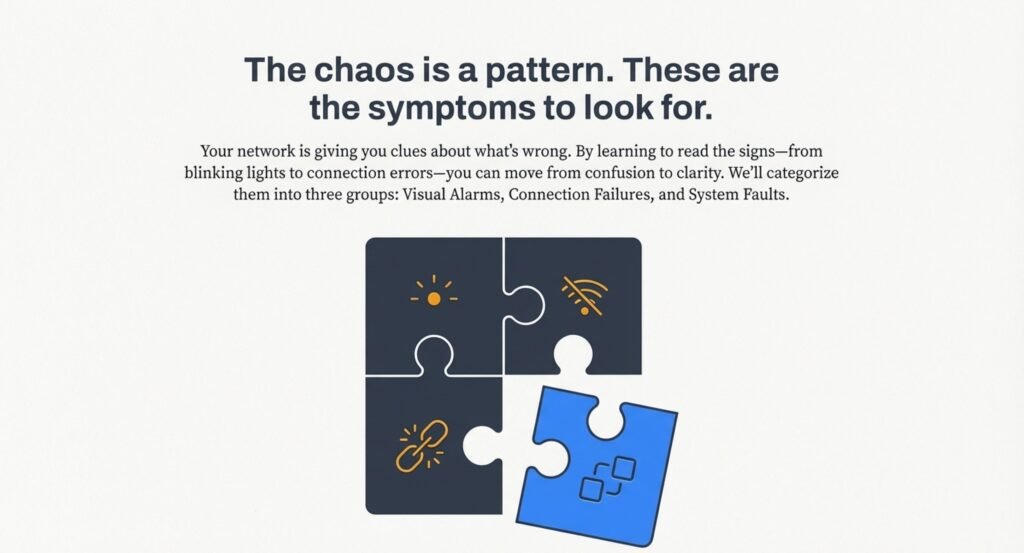
When mesh WiFi not connecting, these are the most common symptoms you’ll see in the app and on the node lights:
- Nodes won’t pair during setup
- Devices connect to 2.4 GHz but not 5 GHz
- Random drops every few hours
- No backhaul connection between nodes
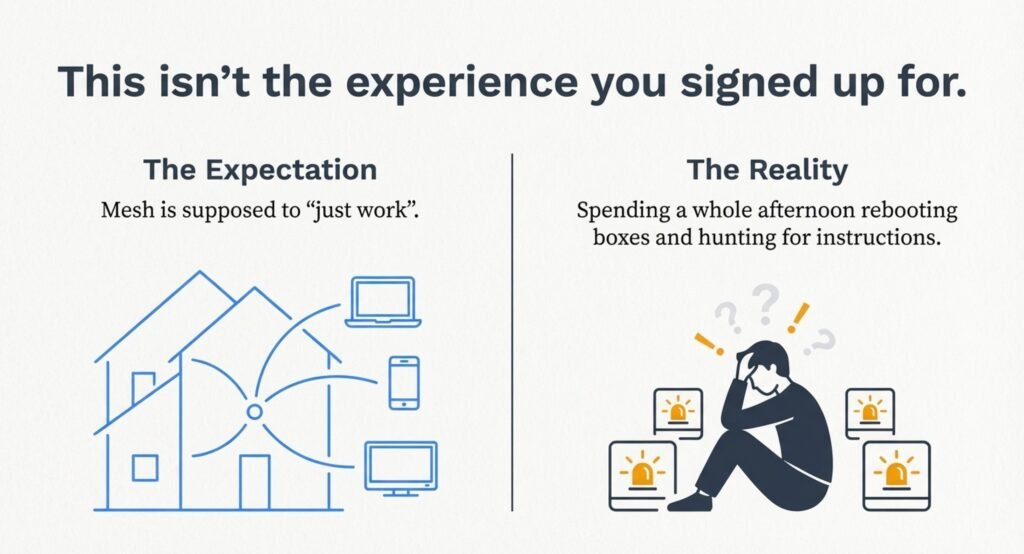
Stuff like this really hurts customer loyalty—people expect mesh to “just work,” not to spend a whole afternoon rebooting boxes and hunting for instructions.
Mesh WiFi Setup Problems Beginners Make And Quick Fixes
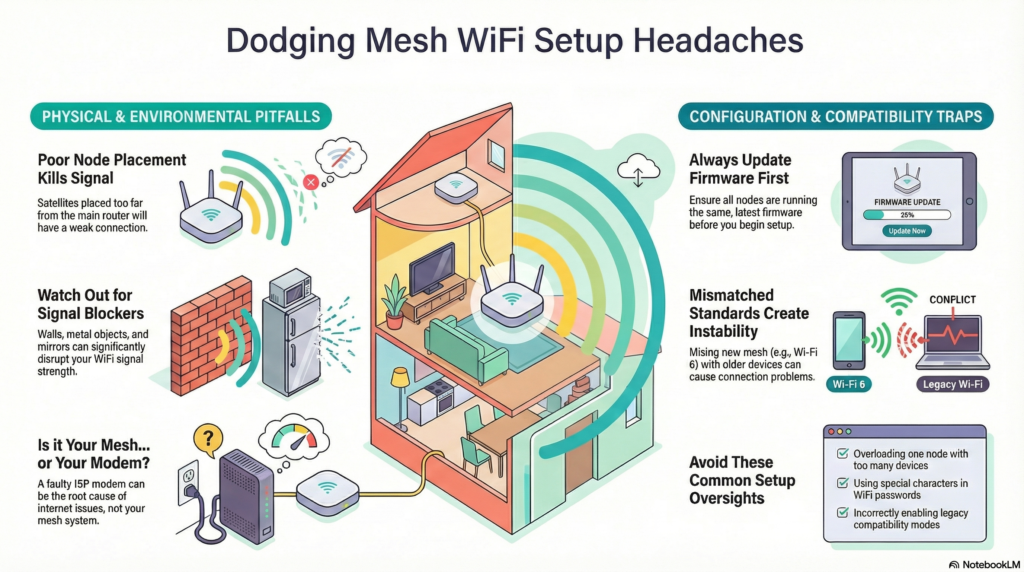
Getting node placement wrong is a classic mistake. Folks put satellites way too far from the main router, so the signal is weak. Walls, metal, mirrors—they all mess with Wi-Fi more than you’d think.
Mixing old and new Wi-Fi standards is another trap. If your mesh is Wi-Fi 6 but your smart plugs only do Wi-Fi 4, stuff can go sideways. And if the nodes aren’t all running the same firmware, they might not even talk to each other.
Beginner errors to watch for:
- Skipping firmware updates before setup
- Using weird characters in Wi-Fi passwords
- Turning on legacy compatibility modes the wrong way
- Connecting too many devices to one node
Lots of people also mix up mesh problems with ISP modem issues. If your cable modem is acting up, the mesh won’t get online—even if the nodes connect to each other just fine.
Mesh Wifi Compatibility With Smart Devices What Breaks First
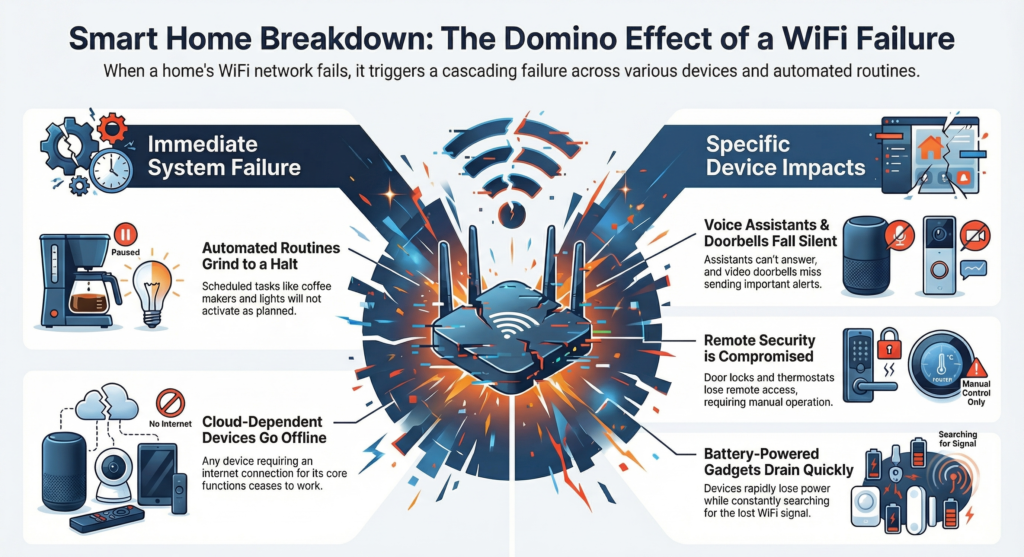
Smart homes need steady Wi-Fi. If the mesh disconnects, routines break. No scheduled coffee. Lights don’t turn off. Door locks lose remote access.
Cloud-dependent devices basically stop working. Voice assistants can’t answer you. Video doorbells miss alerts. Thermostats go manual-only.
Battery-powered gadgets drain fast while searching for lost Wi-Fi. Even Zigbee and Thread hubs need the internet for updates and remote controls.
Mesh Wifi Not Connecting Quick Answer And Fastest Fixes
Mesh WiFi not connecting happens for 3 common reasons: node placement, firmware updates, or network congestion. Just restarting the whole system fixes about 60% of issues in five minutes or less.
Mesh Wifi Nodes Not Connecting Try These 3 Instant Fixes
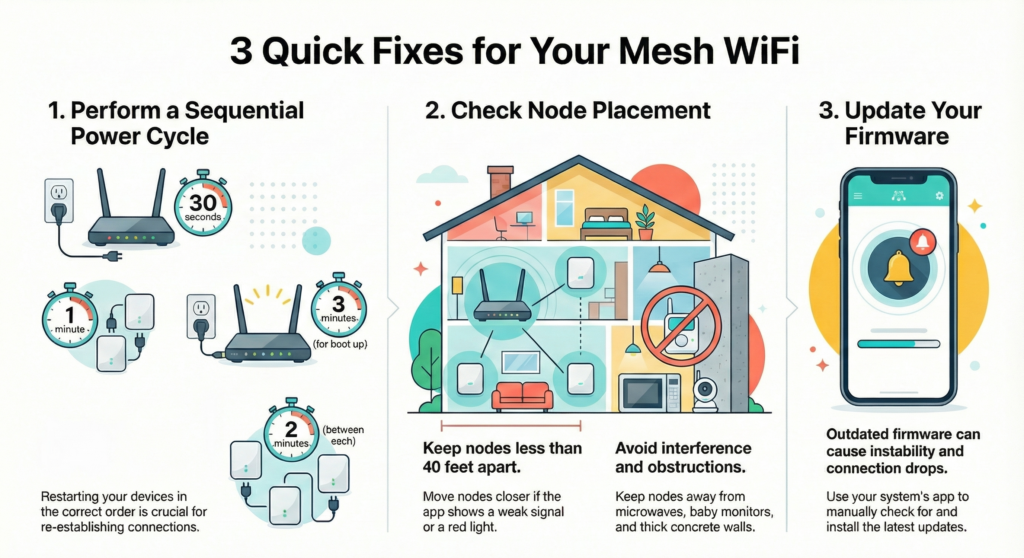
If mesh WiFi not connecting right now, start with these three fixes in order before you change advanced settings.
Power cycle the mesh system in the right order. Unplug the main router for 30 seconds. Unplug all satellites. Wait a minute. Plug the main router back in and let it boot for three minutes. Then, plug in each satellite one by one, waiting two minutes between each.
Check where your nodes are. If nodes are more than 40 feet apart, they’ll probably lose signal. Each satellite should have a strong link to the main router. If the app shows weak signals or red lights, move the nodes closer. Don’t put them near microwaves, baby monitors, or thick concrete walls.
Update firmware using the app. Old firmware causes all sorts of weird drops and device issues. Open your mesh app and look for updates. Most systems update themselves at 3 AM, but doing it manually takes 5–10 minutes and solves a lot of bugs.
Mesh Wifi Setup Problems When To Reset Vs Keep Troubleshooting
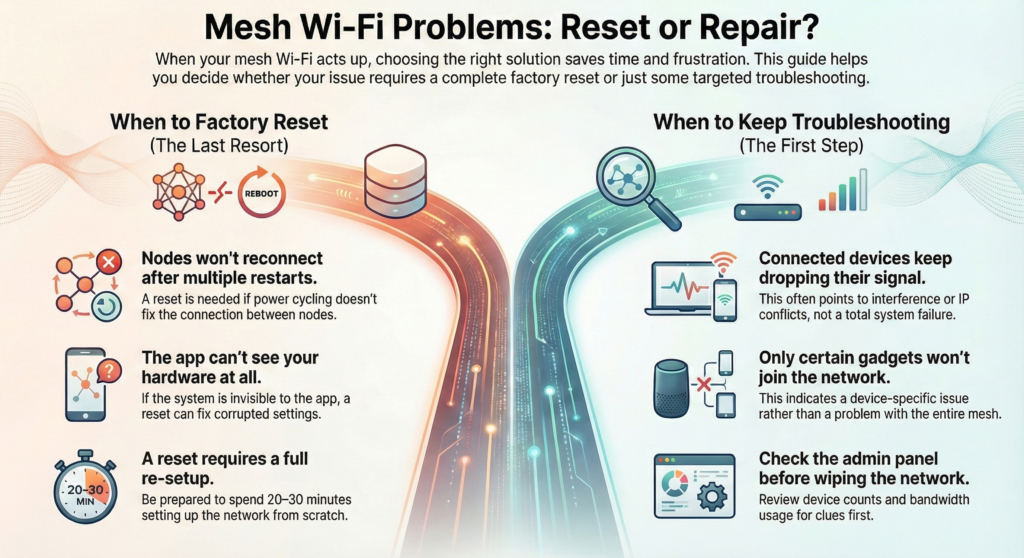
A factory reset is a last resort—do it if nodes still won’t reconnect after several power cycles or if the app can’t see the hardware at all. This wipes everything, so you’ll need to set up from scratch. It usually fixes corrupted settings, but plan for 20–30 minutes to get it all going again.
Keep troubleshooting if devices connect but keep dropping, or if only certain gadgets won’t join. That usually means interference, IP conflicts, or a device-specific quirk—not a total mesh failure. Check the admin panel for device counts and bandwidth before wiping the network.
Mesh Wifi Nodes Not Connecting Step By Step Workflow
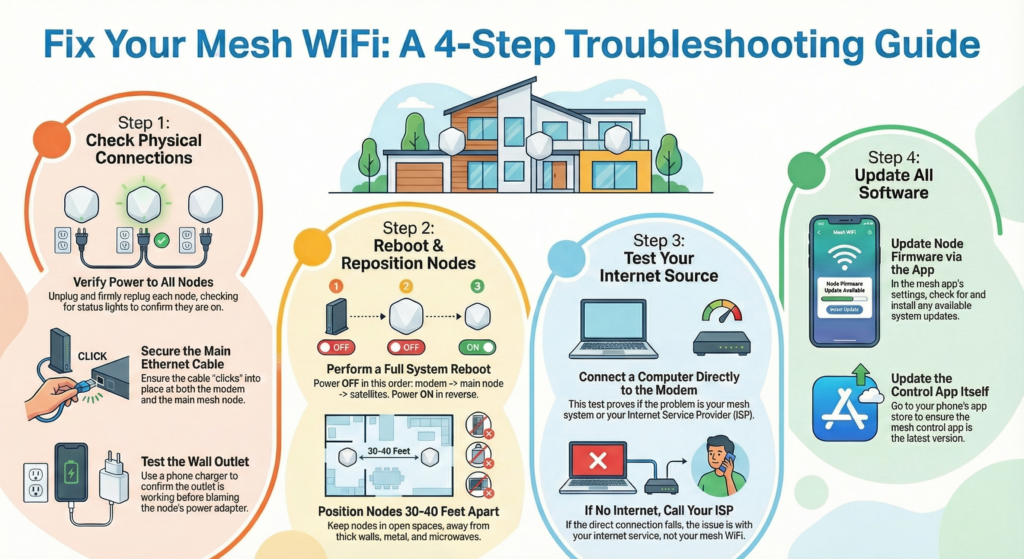
Most mesh WiFi issues get fixed by checking power, then placement, then software—usually in that order. Testing each thing step by step can save you a ton of frustration.
Mesh Wifi Not Connecting Check Power Cables And Modem First
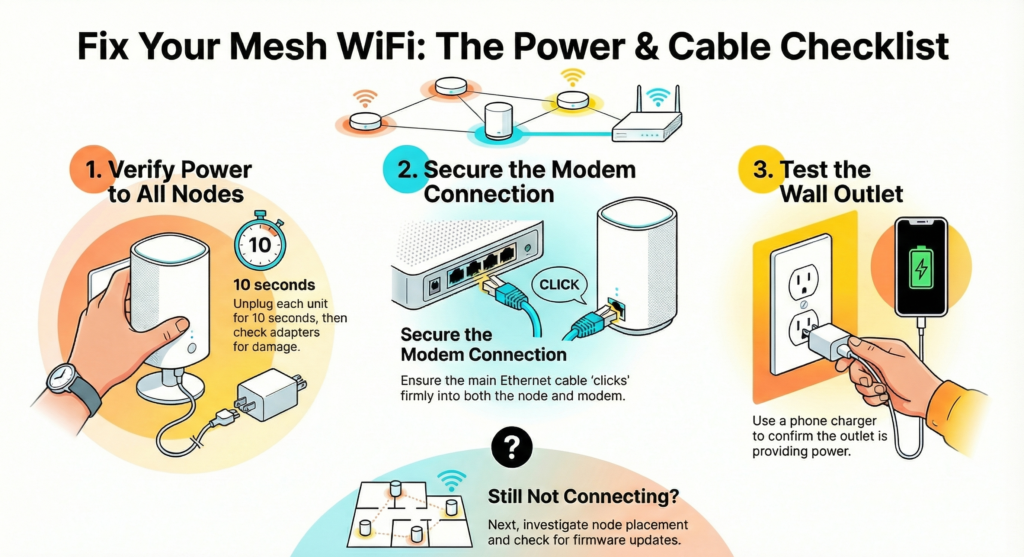
Start simple: make sure every node has solid power. Loose cables or flaky adapters cause random dropouts.
Unplug each node from the wall. Wait 10 seconds. Plug it back in firmly and watch for the lights.
Check the Ethernet cable from the main node to the modem. It should click in at both ends. If it’s loose, you’ll get packet loss and the system might think there’s no internet.
If a node uses a power brick, look for burn marks or bent prongs. Swap it out if you can. Lots of mesh failures are just old adapters dying, not the node itself.
Test the outlet with a phone charger to make sure it’s working. Dead outlets are more common than you might think.
If mesh WiFi not connecting after this, move to placement and firmware next — those two solve most cases.
Mesh Wifi Node Placement Guide Restart Move Nodes 30 To 40 Feet
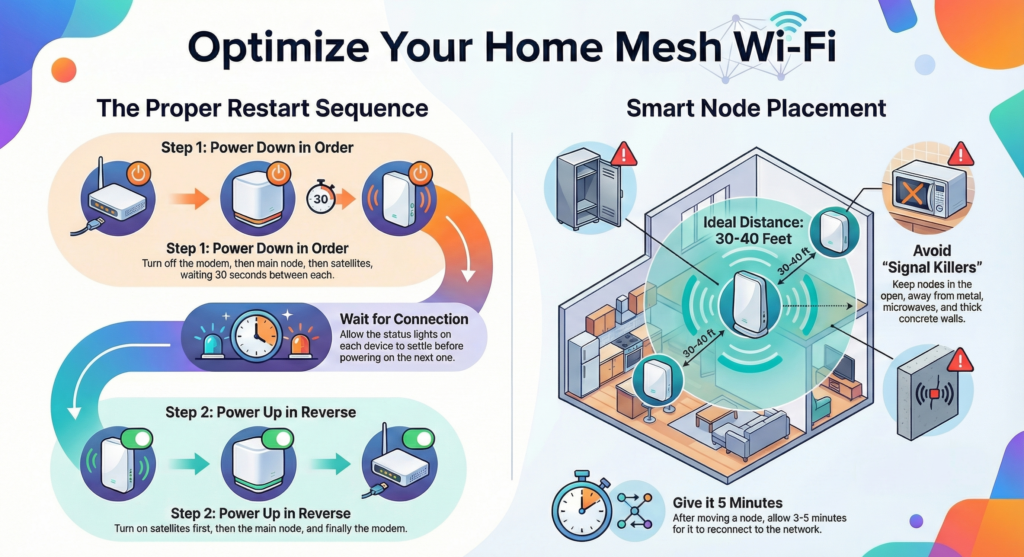
Restarting the whole system clears out temporary glitches. Turn off the modem first. Wait 30 seconds. Turn off the main node. Wait 30 more seconds. Then turn off the satellites.
Turn everything back on in reverse: satellites first (let their LEDs settle), then main node, then modem.
This order helps avoid connection conflicts.
Where you put your nodes matters—a lot. Satellites should be within 30–40 feet of the main node or another satellite. Walls and floors kill signals fast.
Move any disconnected node closer to the main unit, in an open spot away from metal, microwaves, or thick concrete. Don’t hide them in cabinets or behind TVs.
After moving a node, give it three to five minutes to reconnect and rebuild the mesh.
Mesh Wifi Not Connecting Test ISP Modem Wan Connection
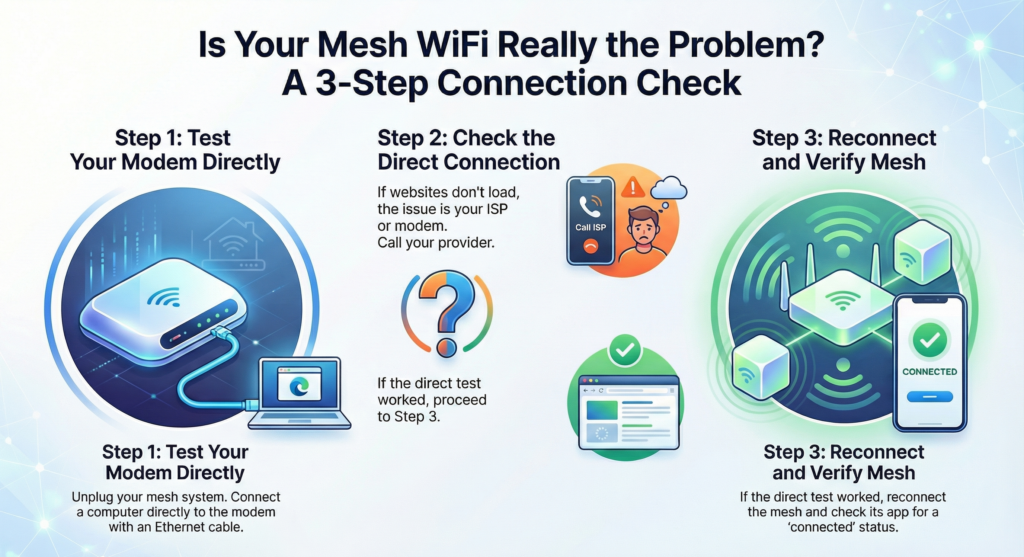
Mesh systems can’t fix a broken ISP connection. Always test the modem before blaming your mesh. A surprising number of mesh WiFi not connecting reports are actually ISP or modem issues, not the mesh system itself.
Unplug the mesh completely. Plug a laptop or desktop straight into the modem with Ethernet. Try loading a few websites. If nothing works, it’s your ISP or modem.
Call your provider if the direct connection fails—they can check for outages or signal issues.
If the direct connection works, reconnect the mesh. Make sure the modem’s “online” light is on. Some modems need a reboot after you swap cables.
Open the mesh app and look for a WAN connection or similar status. It should say “connected” or show a green icon. Red or yellow means it’s still not getting internet from the modem.
Mesh Wifi Firmware Update Fix Update App And Firmware Correctly
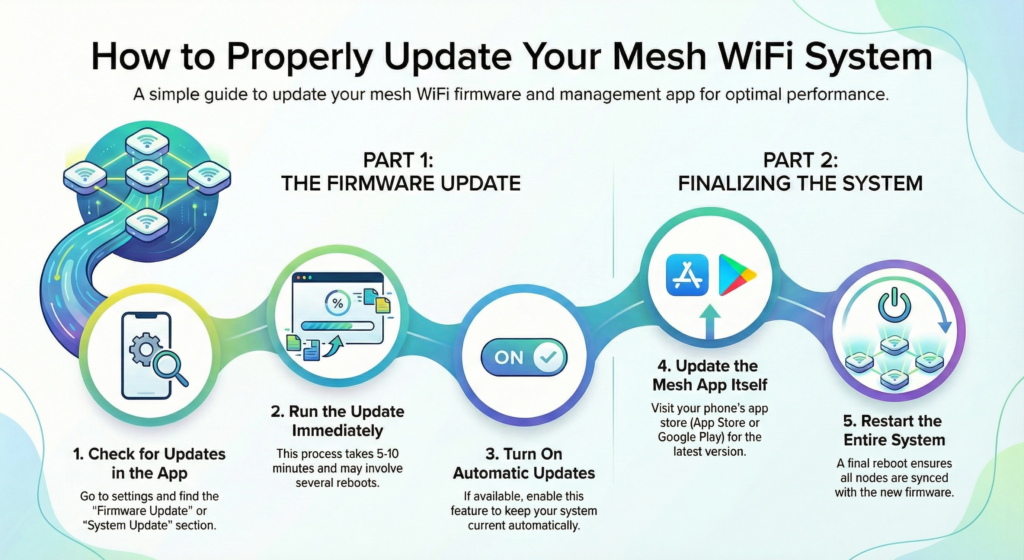
Old firmware causes all sorts of compatibility headaches. Mesh systems need updates just like phones do.
Open the mesh app on your phone or tablet. Go to settings. Find firmware version or system update and check for updates.
If there’s an update, run it right away. Keep your phone near the main node during the process. Updates usually take 5–10 minutes and might reboot the nodes a few times.
Some mesh systems update automatically at night, but double-check in the app. Turn on auto-updates if they’re off.
Update the app itself in the App Store or Google Play. An old app can’t talk to new firmware properly.
After updating, restart the mesh system again (see the steps above). This makes sure all nodes are on the same firmware and can see each other.
Mesh Wifi Privacy Risks And How To Reduce Cloud Tracking
Mesh WiFi runs all your home’s internet traffic, so it can see and log a lot about your online life. Knowing what these devices collect—and how to limit it—helps keep your household’s privacy intact.
Mesh Wifi Privacy Risks What Your Router Can Log
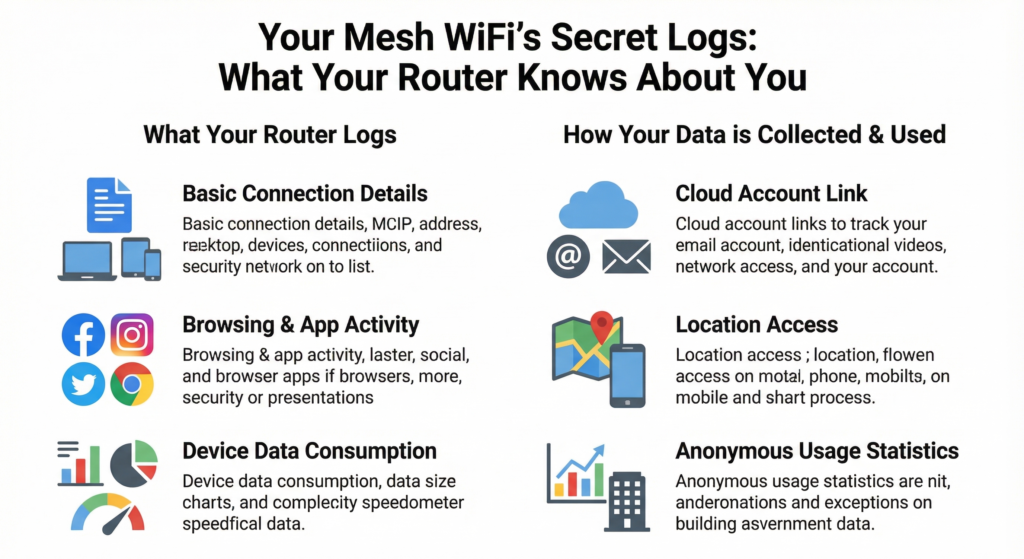
Mesh routers log more than just connections. Most will track device names, MAC and IP addresses, when each device connects or disconnects, and sometimes even browsing history. Some brands go further, logging which sites you visit, app usage, and how much data each device uses.
Many mesh systems want you to make a cloud account during setup, linking your network activity to your email or phone number. Their apps might also ask for your location to enable remote controls.
Premium mesh brands usually collect less invasive data, but budget options often send anonymized usage stats to the parent company. That data helps them improve products, but it can include performance metrics and update patterns.
Secure Mesh Wifi System Risks Breaches Weak Encryption And Defaults
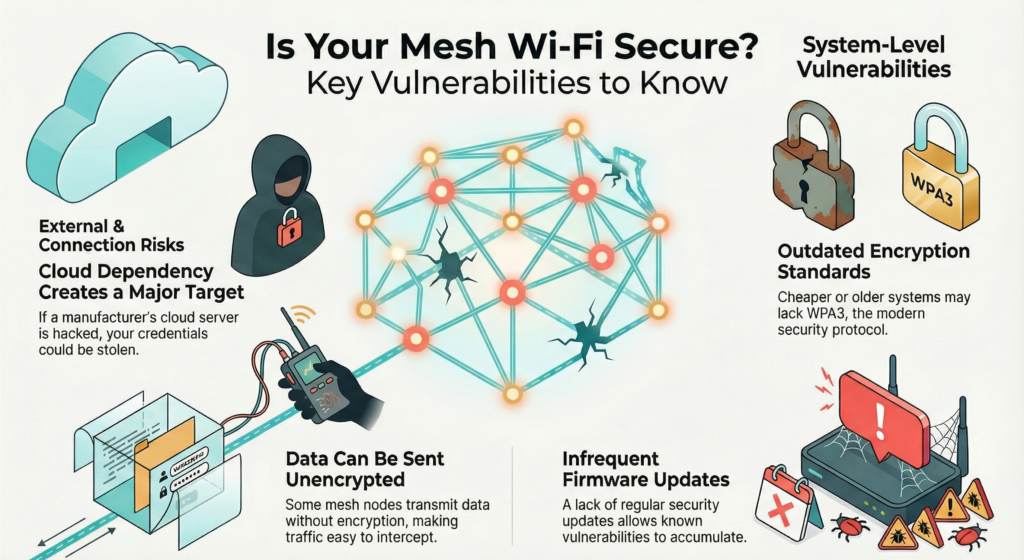
Weak data security practices can ruin trust and open up home networks to all sorts of trouble. Mesh systems that depend a lot on cloud servers just add more ways for things to go wrong. If a manufacturer’s servers ever get hacked, your credentials and network details might end up in the wrong hands.
Another issue? Some mesh nodes send data without proper encryption. Cheaper or older systems might skip WPA3, making your traffic easy to intercept. If your firmware isn’t getting regular security updates, it can collect vulnerabilities over time—pretty risky.
Common leak scenarios include:
- Data breaches at the manufacturer that expose user accounts
- Admin panels left wide open to the internet
- Default passwords that nobody bothers to change
- Third-party integrations with sloppy security
Mesh Wifi Privacy Risks App Permissions You Should Disable
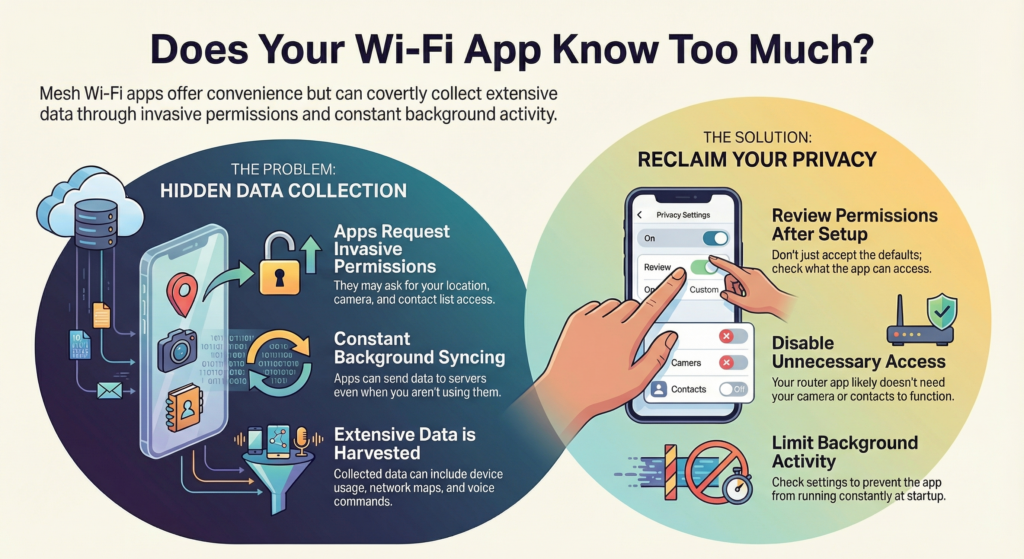
Mesh router apps often want more permissions than you’d expect. Location tracking, camera access, your contact list—these might pop up when you install. It’s fair to ask: why does a router app need to poke around my phone sensors or storage?
Some apps keep syncing data with the manufacturer’s servers even when you’re not using them. That’s a lot of background activity most folks don’t notice. You’ll also see apps that want to run at startup, keeping that cloud connection alive 24/7.
The data these apps grab can include device usage, network maps, and even voice commands if you’ve got smart assistants hooked up. It’s smart to review and limit these permissions after setup—no need to give away more data than necessary.
Secure Mesh Wifi System Settings Guest Network DNS Telemetry Off
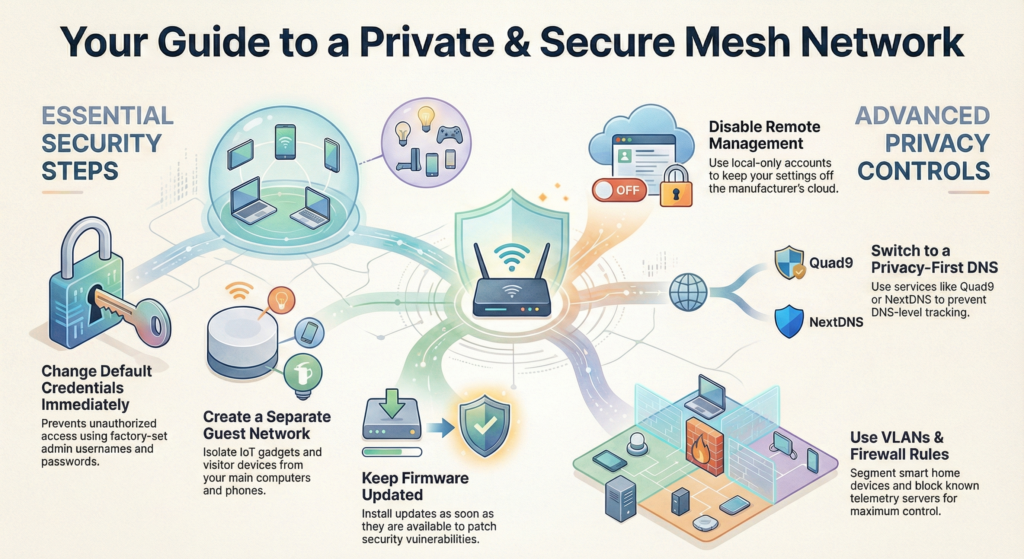
Setting up mesh systems without cloud accounts is honestly the best way to protect your privacy. A few brands let you manage everything locally, so your settings stay on your home network. That means a breach on their end won’t touch your stuff.
Practical privacy steps:
- Make a separate guest network for IoT gadgets
- Turn off remote management features
- Switch to privacy-first DNS like Quad9 or NextDNS
- Keep firmware updated to close security gaps
- Change default admin credentials right away
Using VLANs helps keep smart home devices away from computers and phones with sensitive info. If you’re a bit more techy, set up firewall rules to block known telemetry servers. For anyone worried about balancing privacy with digital marketing, these tools give you more control over what leaves your network.
If you’re running a business from home, treat your mesh Wi-Fi like any other business infrastructure—use the same security standards you’d expect at the office.
Mesh Wifi Compatibility With Smart Devices Matter Thread Zigbee
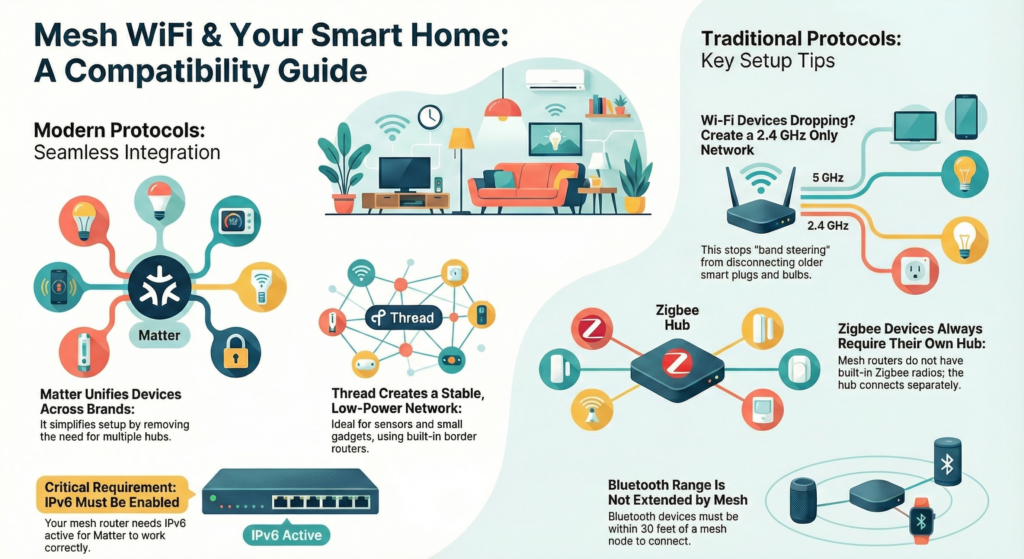
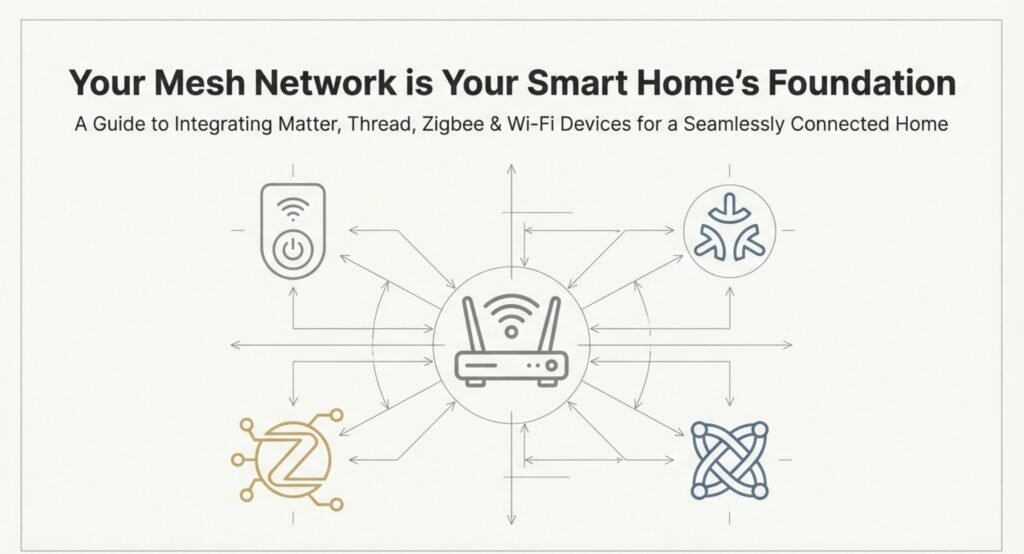
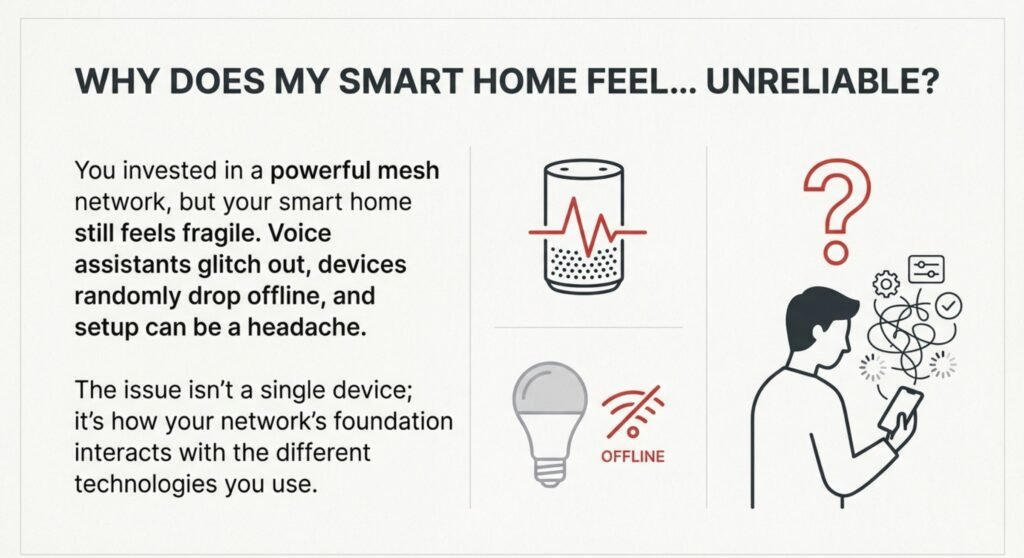
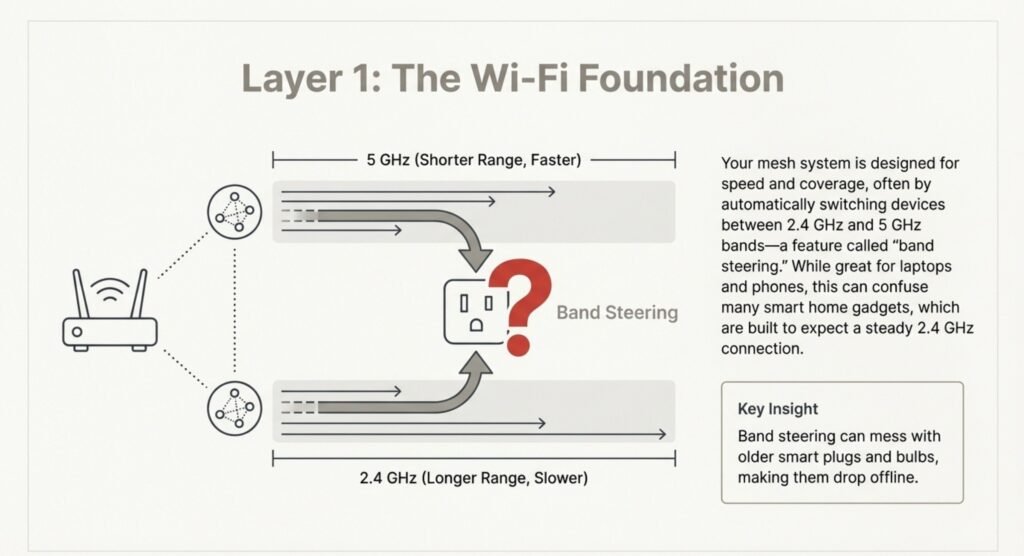
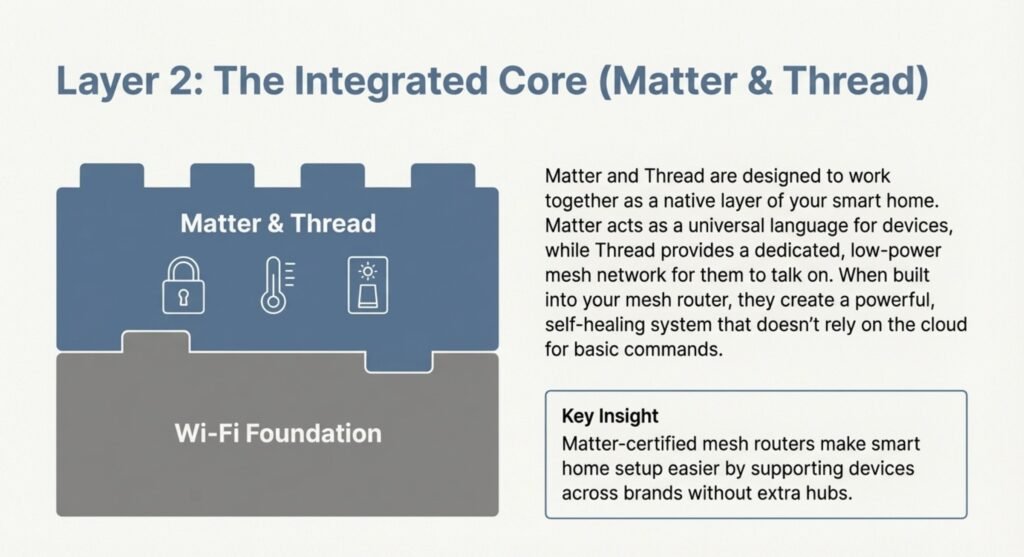
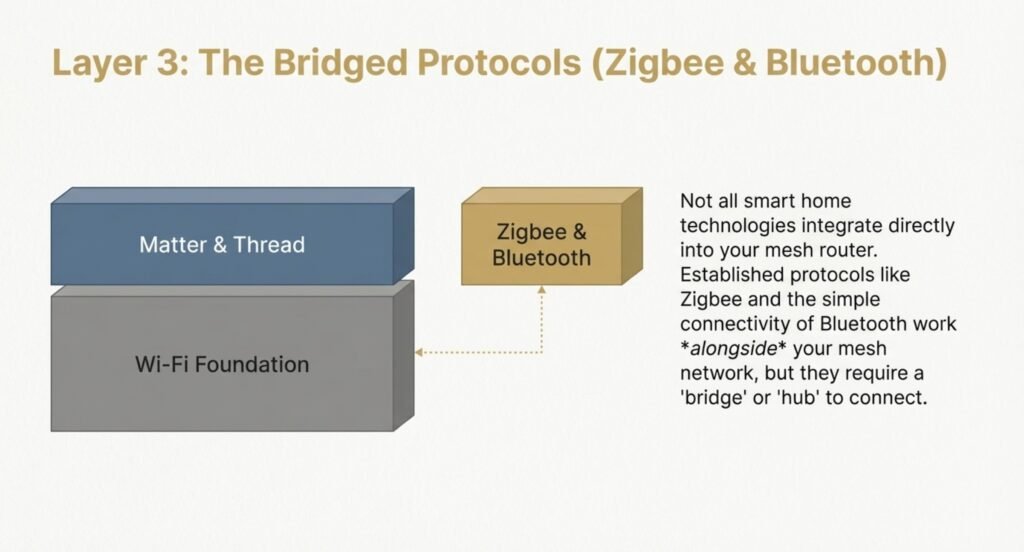
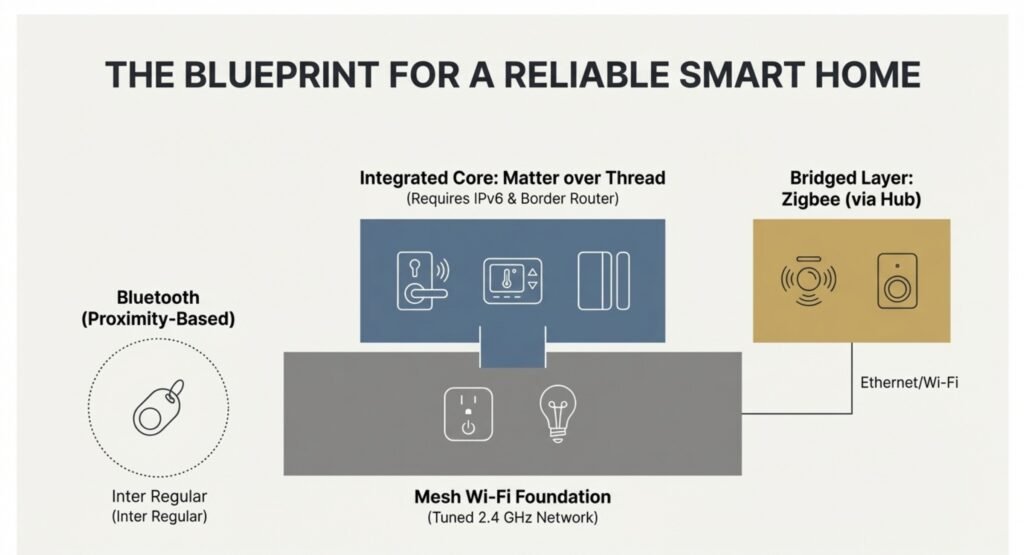
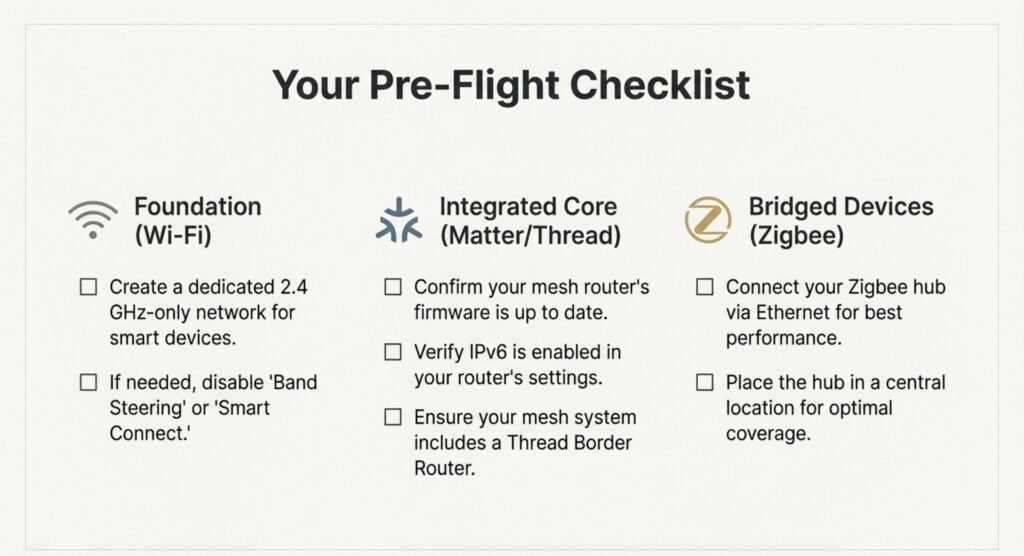
Mesh WiFi plays differently with smart home tech depending on whether you’re using Matter, Thread, Zigbee, or just plain Wi-Fi. Knowing how your mesh handles each protocol can save you a lot of headaches and make sure your voice assistants don’t glitch out.
Mesh Wifi Compatibility With Smart Devices Matter Thread IPV6 Setup
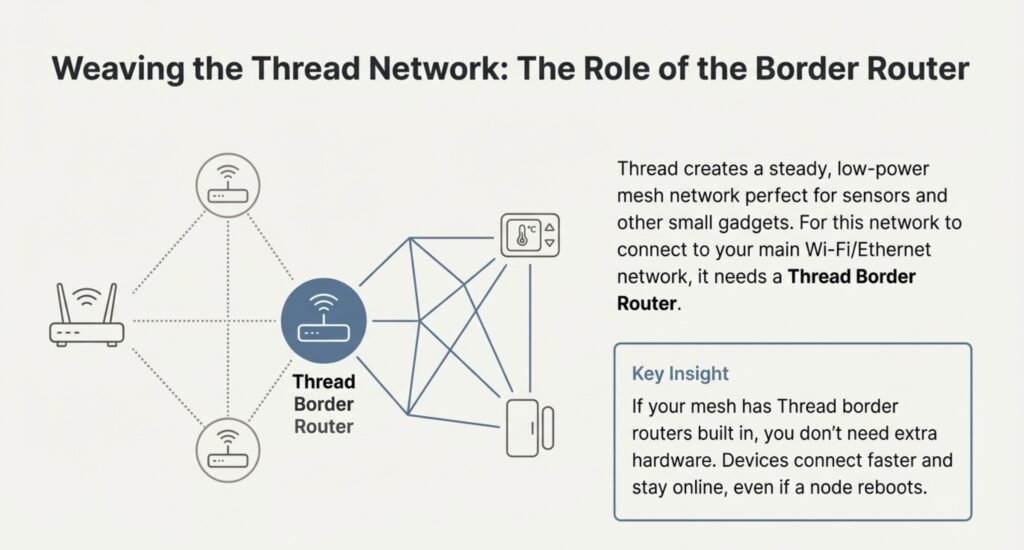
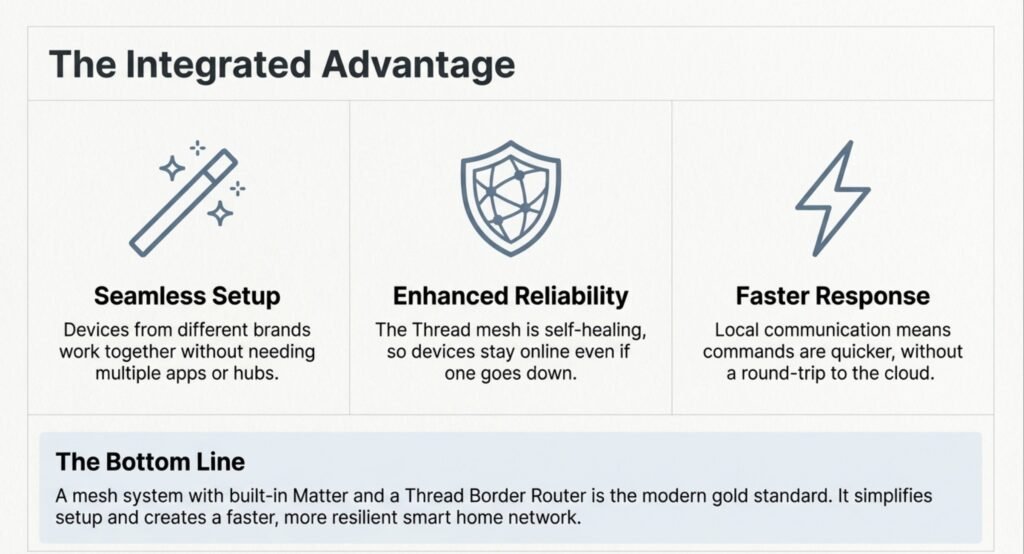
Matter-certified mesh routers make smart home setup easier by supporting devices across brands without extra hubs. Thread-enabled mesh creates a steady, low-power network for sensors and tiny gadgets that Wi-Fi can’t always handle well.
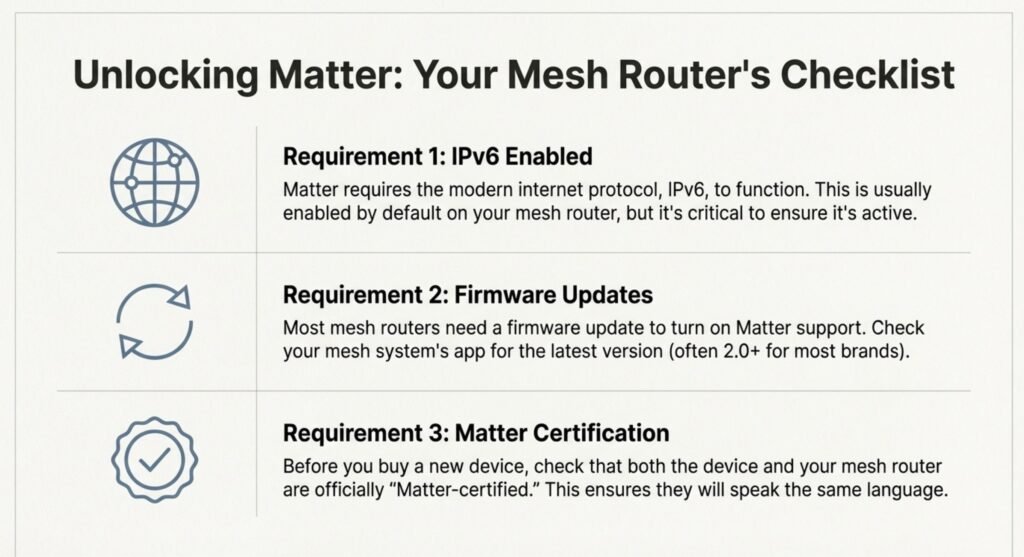
Most mesh routers need a firmware update to turn on Matter support. Always check the app for Matter certification before buying new smart devices—it’s easy to overlook.
If your mesh has Thread border routers built in, you don’t need extra hardware. Devices connect faster and stay online, even if a node reboots.
Key compatibility must-haves:
- Mesh router needs IPv6 for Matter
- Thread setup needs at least one border router node
- Firmware version 2.0+ for most brands
Mesh Wifi Keeps Disconnecting Fix 2.4Ghz 5Ghz Band Steering Issues
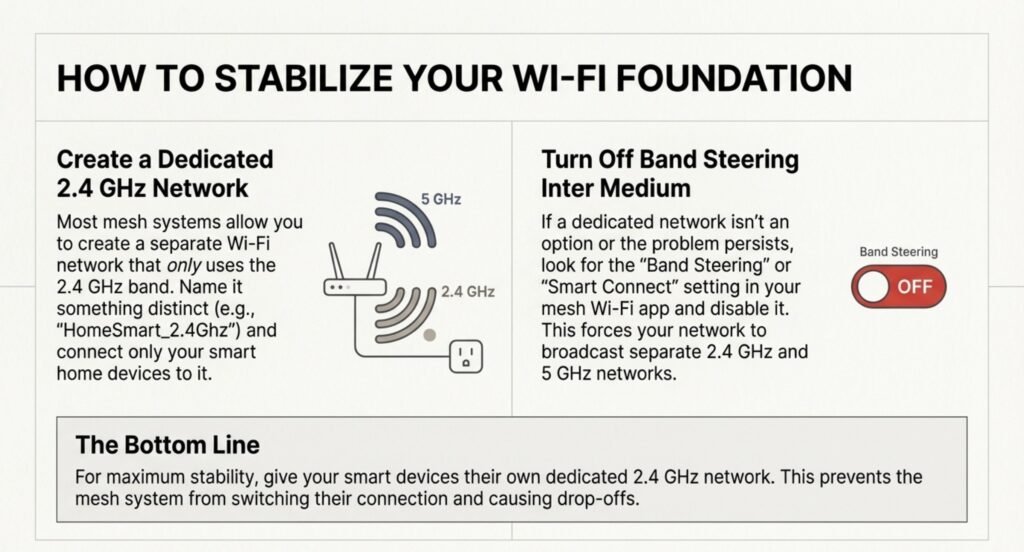
Smart home gadgets on 2.4 GHz Wi-Fi usually connect better than ones stuck on 5 GHz, since mesh networks like to switch bands. Band steering can mess with older smart plugs and bulbs, making them drop offline.
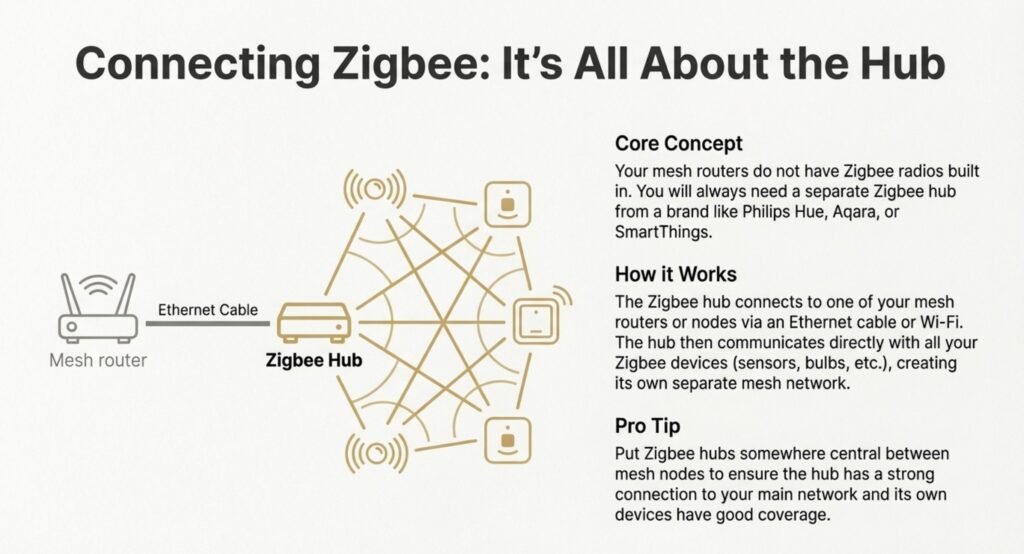
Zigbee devices need their own hub—mesh routers don’t have Zigbee radios built in. The hub connects to your mesh by ethernet or Wi-Fi and talks to Zigbee sensors from there.
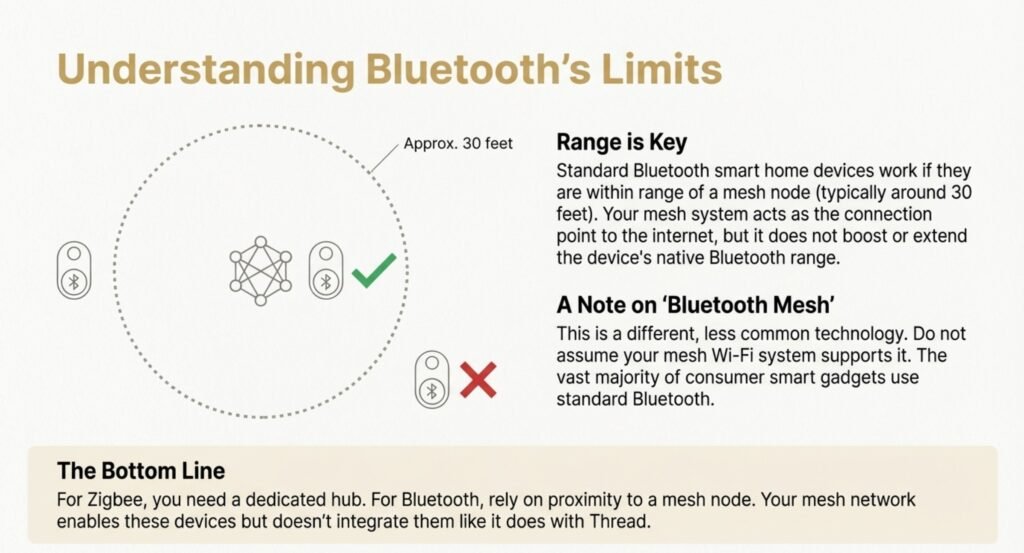
Bluetooth smart home stuff works if it’s within 30 feet of a mesh node, but don’t expect mesh to boost its range. Bluetooth mesh is a different animal, and honestly, not many consumer gadgets use it yet.
Network setup tips:
- Make a special 2.4 GHz Wi-Fi name just for smart home devices
- Turn off band steering if your devices keep dropping
- Put Zigbee hubs somewhere central between mesh nodes
Best Mesh Wifi For Smart Home Alexa Google Home Apple Home Tips
Amazon Alexa works with tons of devices over Wi-Fi, no fancy mesh features needed. The Alexa app usually finds gadgets as soon as they’re on your mesh network.
Google Home runs smoothest with mesh systems that play nice with Google Assistant. Nest Wifi and Nest Wifi Pro even have Google Assistant speakers built in for voice control.
Apple HomeKit is a bit picky—it needs mesh routers that support HomeKit Secure Router for extra privacy. That way, your HomeKit stuff gets its own network, and sketchy traffic gets blocked.
Voice assistant requirements:
- Alexa: 2.4 GHz Wi-Fi, UPnP turned on
- Google Home: Needs both IPv4 and IPv6
- Apple HomeKit: Certified HomeKit Router, iOS 13 or newer
Best Mesh Wifi For Smart Home When To Upgrade Instead Of Troubleshooting
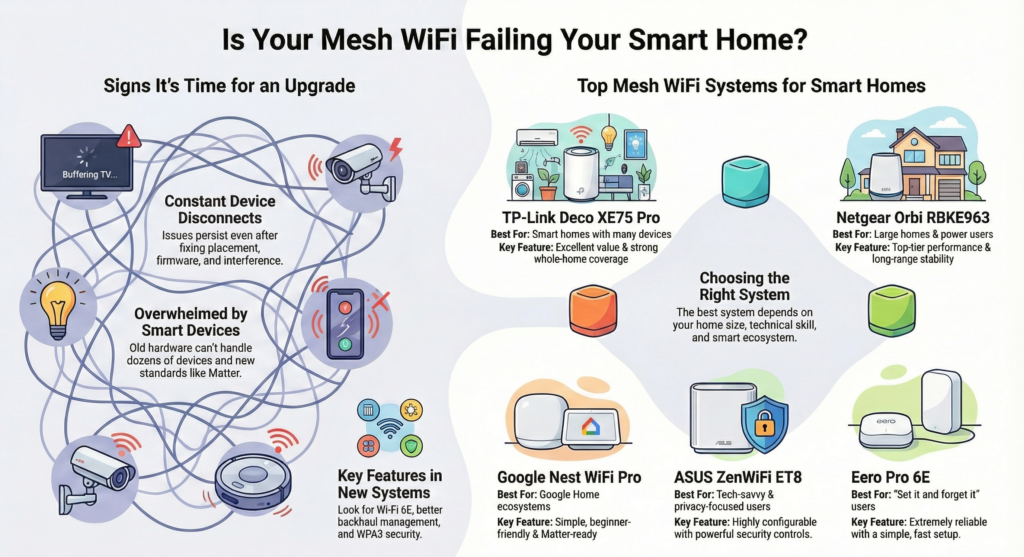
If mesh wifi not connecting keeps happening even after you fix placement, firmware, and interference, it’s often a sign that your hardware has hit its limits. Older mesh systems struggle with today’s reality: dozens of smart devices, constant cloud sync, and mixed standards like Matter, Thread, and legacy Wi-Fi gadgets all running at once.
The biggest improvements in newer mesh WiFi systems come from:
- Wi-Fi 6E and Wi-Fi 7 for cleaner spectrum and lower latency
- Better backhaul management (dedicated or dynamic) to prevent node dropouts
- Smarter device steering that finally plays well with smart home gear
- Improved security layers (WPA3, auto-patching, better isolation for IoT)
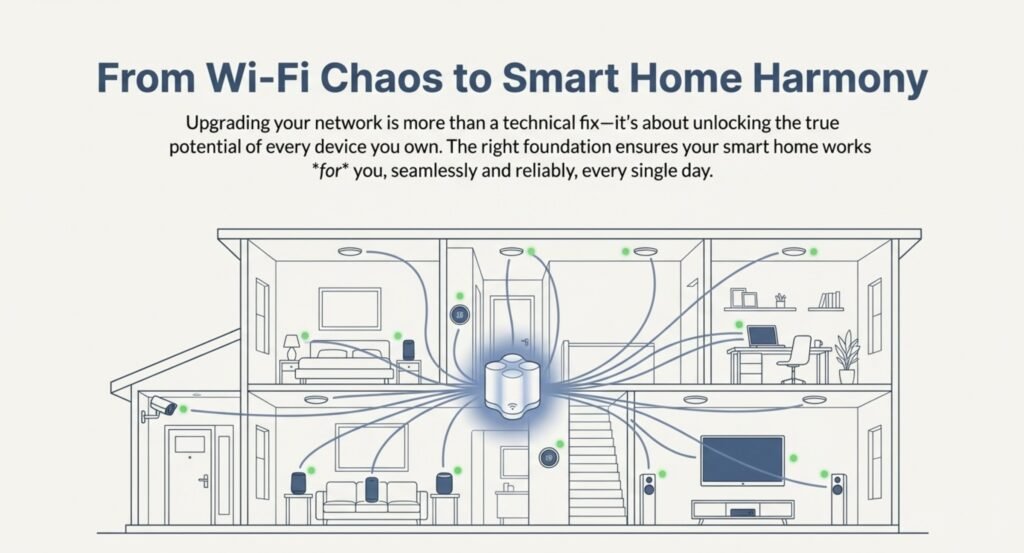
If you’re tired of recurring disconnects, upgrading to a modern, secure mesh WiFi system can eliminate most setup problems entirely — especially in smart homes packed with cameras, voice assistants, and automation hubs.

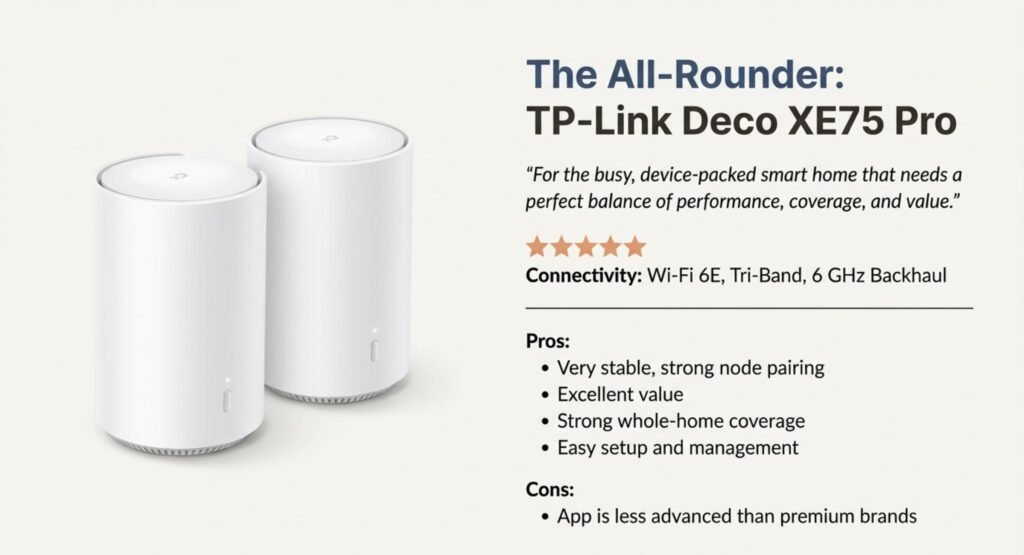
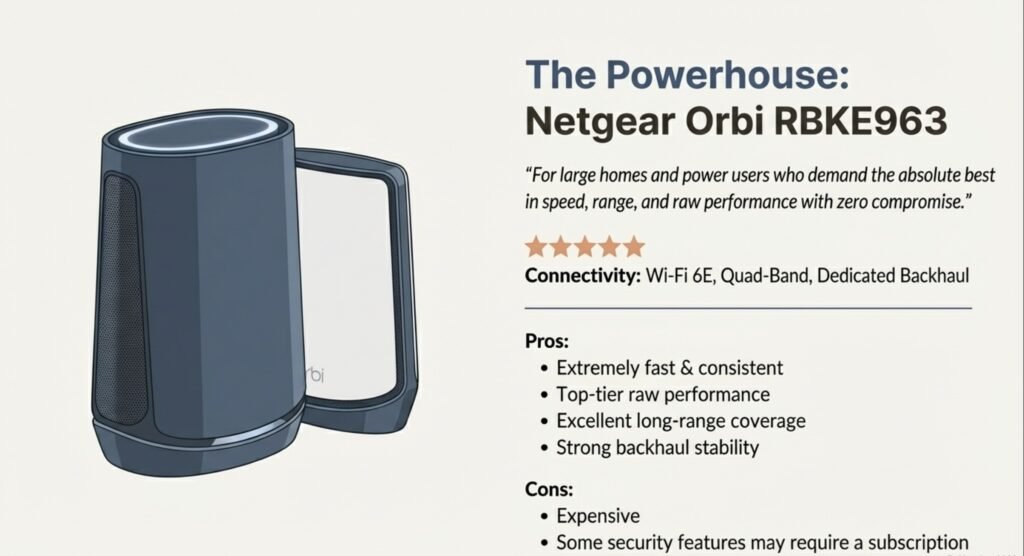
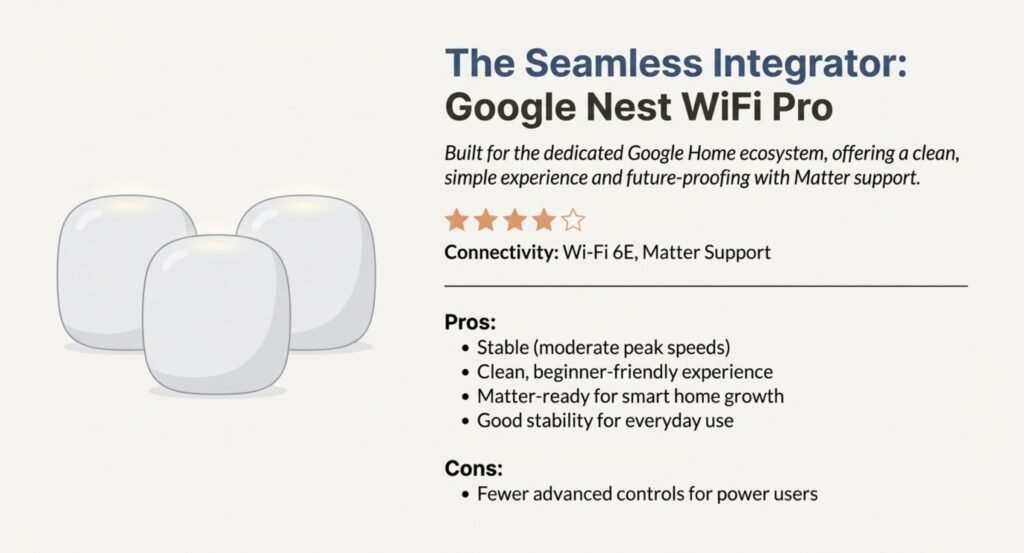
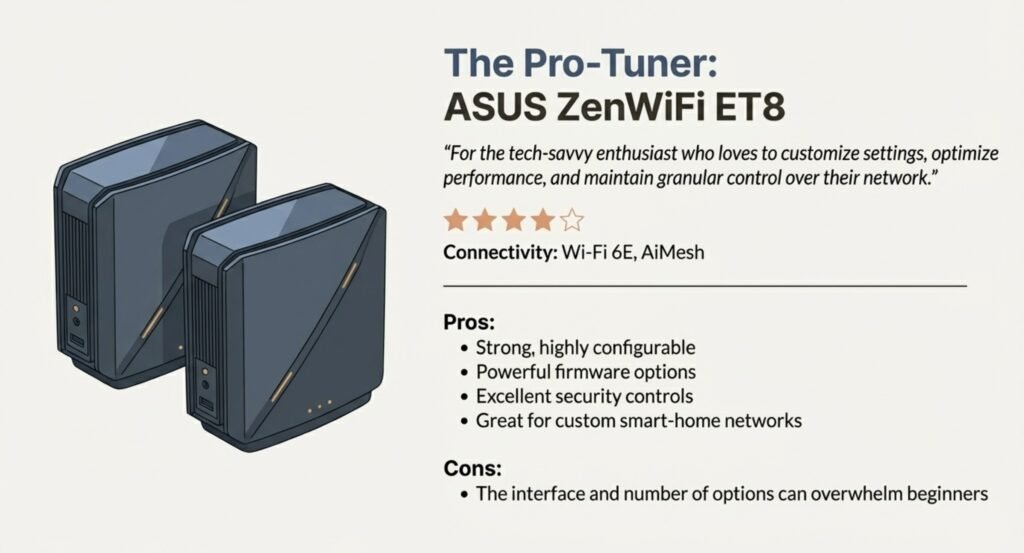
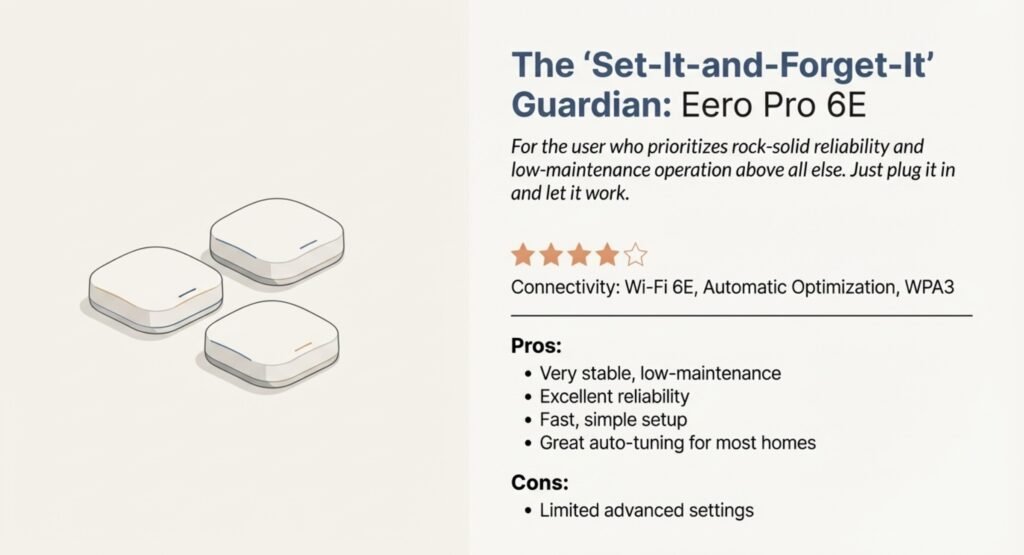

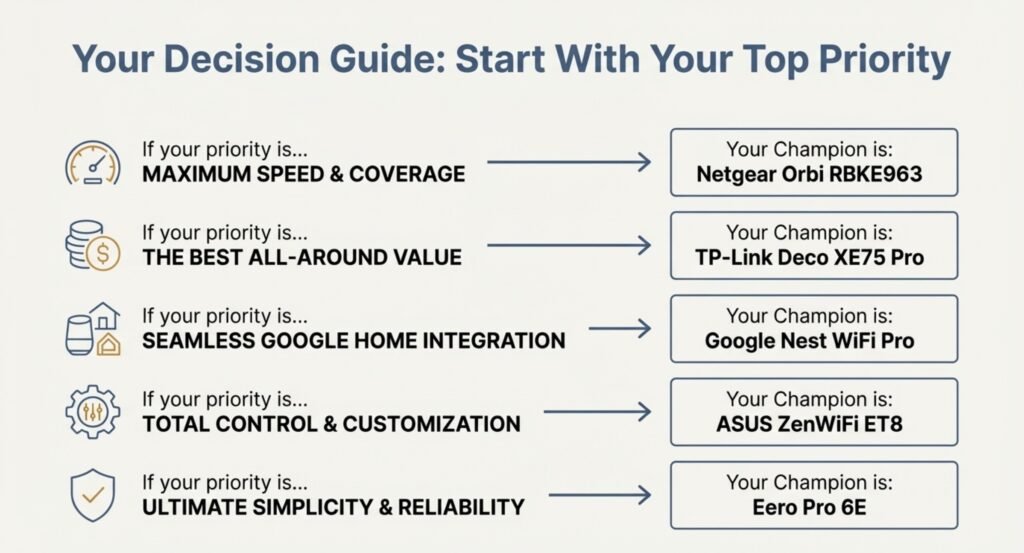
Below is a clear comparison of the best mesh WiFi systems available right now, based on real-world stability, smart-home compatibility, and long-term reliability.
| Mesh System | Device Details | Best For | Connectivity Performance | Pros | Cons | Link |
|---|---|---|---|---|---|---|
| TP-Link Deco XE75 Pro | Wi-Fi 6E, tri-band, 6 GHz backhaul, WPA3 | Smart homes with many devices | ★★★★★ Very stable, strong node pairing |
|
|
View on Amazon |
| Netgear Orbi RBKE963 | Wi-Fi 6E, quad-band, dedicated backhaul | Large homes & power users | ★★★★★ Extremely fast & consistent |
|
|
View on Amazon |
| Google Nest WiFi Pro | Wi-Fi 6E, Matter support, minimalist app | Google Home ecosystems | ★★★★☆ Stable (moderate peak speeds) |
|
|
View on Amazon |
| ASUS ZenWiFi ET8 | Wi-Fi 6E, AiMesh, advanced controls | Tech-savvy users & privacy-focused setups | ★★★★☆ Strong, highly configurable |
|
|
View on Amazon |
| Eero Pro 6E | Wi-Fi 6E, automatic optimization, WPA3 | Hands-off setup seekers | ★★★★☆ Very stable, low-maintenance |
|
|
View on Amazon |
Mesh Wifi Not Connecting FAQ Fixes Privacy And Compatibility
Mesh WiFi raises plenty of questions once it’s up and running in a smart home—security updates, device compatibility, privacy, you name it. Here are some quick answers for folks just getting started.
Why is my mesh wifi not connecting even after setup?
In most cases, mesh wifi not connecting is caused by one of three things:
poor node placement, outdated firmware, or band steering conflicts with smart devices.
Start by placing nodes within 30–40 feet, updating firmware on all units, and temporarily disabling band steering if IoT devices keep dropping.
How do I keep my mesh wifi system secure?
To reduce security risks on a mesh wifi network:
- Enable automatic firmware updates
- Change default admin usernames and passwords
- Turn on WPA3 encryption if available
- Disable remote management unless absolutely needed
- Use a guest network for smart home devices
These steps significantly lower the risk of unauthorized access.
What setup mistakes cause mesh wifi connection problems?
The most common mesh wifi setup problems include:
- Placing nodes too far apart
- Skipping firmware updates before adding devices
- Leaving ISP modem WiFi enabled (causing network conflicts)
- Mixing old routers with new mesh systems (double NAT issues)
Fixing these usually restores stable connectivity quickly.
How can I prevent mesh wifi from disconnecting repeatedly?
If mesh wifi keeps disconnecting:
- Reboot all nodes after firmware updates
- Assign static IPs to hubs and cameras
- Switch DNS to Cloudflare (1.1.1.1) or Google DNS
- Avoid overloading a single node (25–40 devices max)
Consistent dropouts usually point to congestion or IP conflicts.
What are the main mesh wifi privacy risks?
Most mesh systems log device names, connection times, and usage data via cloud dashboards. Privacy risks increase when:
- Telemetry is enabled by default
- Guest networks share the same VLAN
- Voice assistants are deeply integrated
For better privacy, limit cloud features, review app permissions, and isolate IoT devices.
How do I ensure compatibility with Matter, Thread, and smart devices?
To maintain compatibility with modern smart-home standards:
- Enable IPv6 on your router (required for Matter)
- Keep firmware updated for Thread support
- Use 2.4 GHz WiFi for older smart devices
- Place Zigbee hubs centrally between mesh nodes
This prevents pairing failures and device dropouts.
When should I upgrade instead of troubleshooting?
If mesh wifi not connecting keeps happening after correct placement, firmware updates, and security tuning, upgrading to a newer mesh system (Wi-Fi 6E or newer) is often the most reliable long-term fix—especially in smart homes with many devices.